Building on Major Taylor’s East Coast legacy
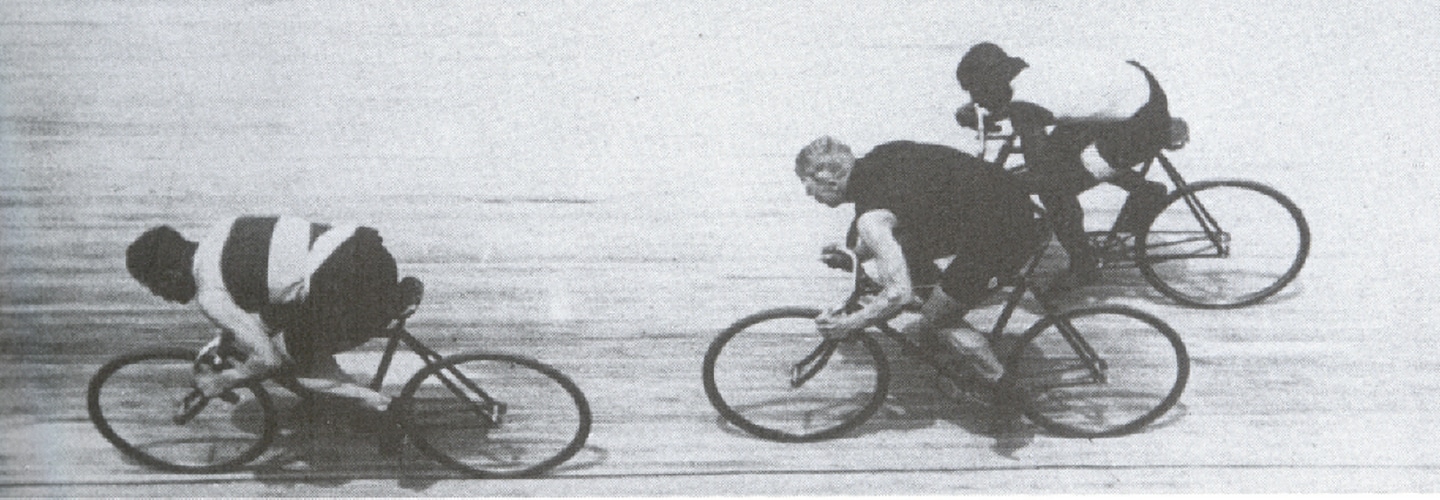
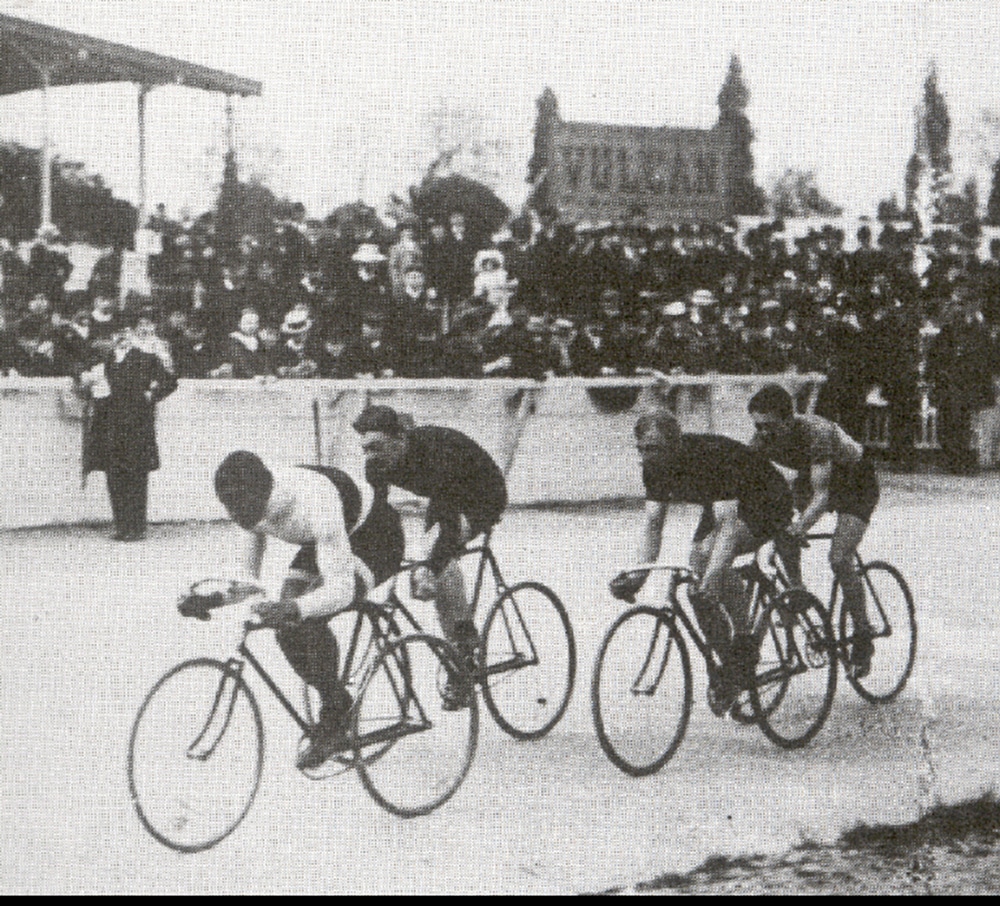
Photo above: A rare action shot in Paris, 1903. Taylor comes from behind (on the outside) to contest a sprint with Harry Meyers of Holland and Thorwald Ellegaard of Denmark. The difference between Taylor’s extended “modern” position and the contracted positions of the other two champions is clearly visible here. Jules Beau collection, Bibliotheque Nationale, Paris. This is the image used for one side of the Major Taylor monument in Worcester. COURTESY OF MAJOR TAYLOR ASSOCIATION, INC.
The East Coast Greenway Alliance is a proud supporter of the fifth-annual Major Taylor International Cycling Convention, coming to our headquarters city of Durham, North Carolina, June 4-7, for its first East Coast appearance.
Framed by the beauty of the Carolinas and the rich cultural legacy of Durham, this year’s event offers hundreds of cyclists from across the country an opportunity to ride, reflect and reconnect in honor of Major Taylor (1878-1932), who is regarded by many as the world’s first black sports superstar.
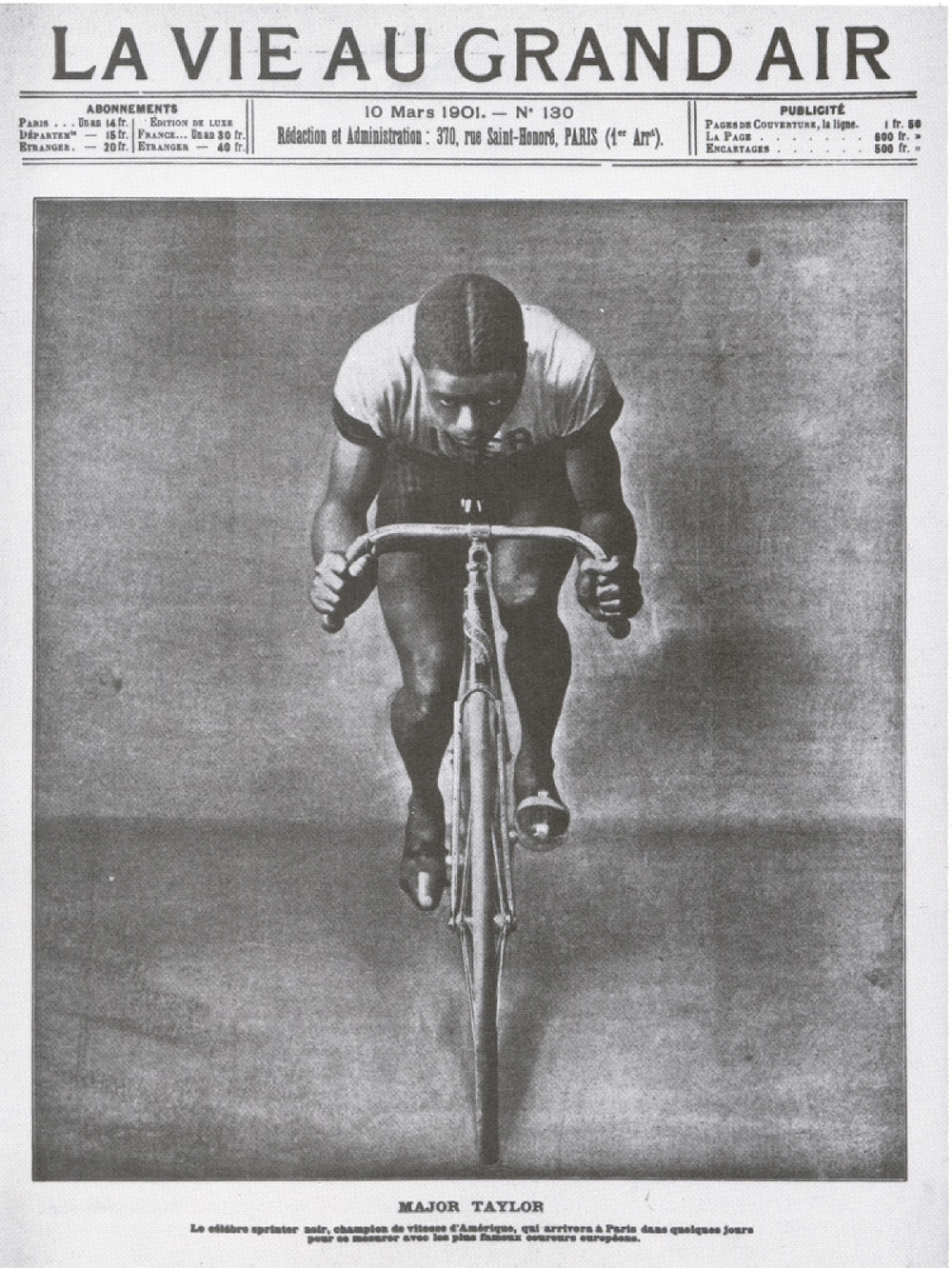
According to the Major Taylor Association, Taylor, “was world cycling champion in 1899, American sprint champion in 1900 and set numerous track cycling records. Nicknamed Major in his youth in Indianapolis and later known as the Worcester Whirlwind after his adopted hometown in Massachusetts, he was the second African-American world champion in any sport. In the Jim Crow era of strict racial segregation, Taylor had to fight prejudice just to get on the starting line. He faced closed doors and open hostility with remarkable dignity.”
“Taylor had to fight prejudice just to get on the starting line. He faced closed doors and open hostility with remarkable dignity.”
Taylor was born and raised in Indianapolis, but has many ties to the East Coast and today’s East Coast Greenway route. From Boston to Philadelphia and beyond, the historic spine of American cycling in the 1890-1900s overlaps today’s East Coast Greenway. This year’s event in Durham extends Taylor’s legacy even further south.
Read on for more about Taylor’s remarkable career and his connections to today’s East Coast Greenway route from Boston to Durham:
Boston/Cambridge, Massachusetts
In 1897, Boston newspapers listed Taylor as being from Cambridgeport, Massachusetts, where he was likely based while training and racing at Charles River Park, a velodrome that once stood in Cambridge just blocks from the Charles River and a scenic segment of today’s East Coast Greenway. Overflow crowds of more than 16,000 would gather to watch Taylor and the top cycling stars of the day.
Worcester, Massachusetts
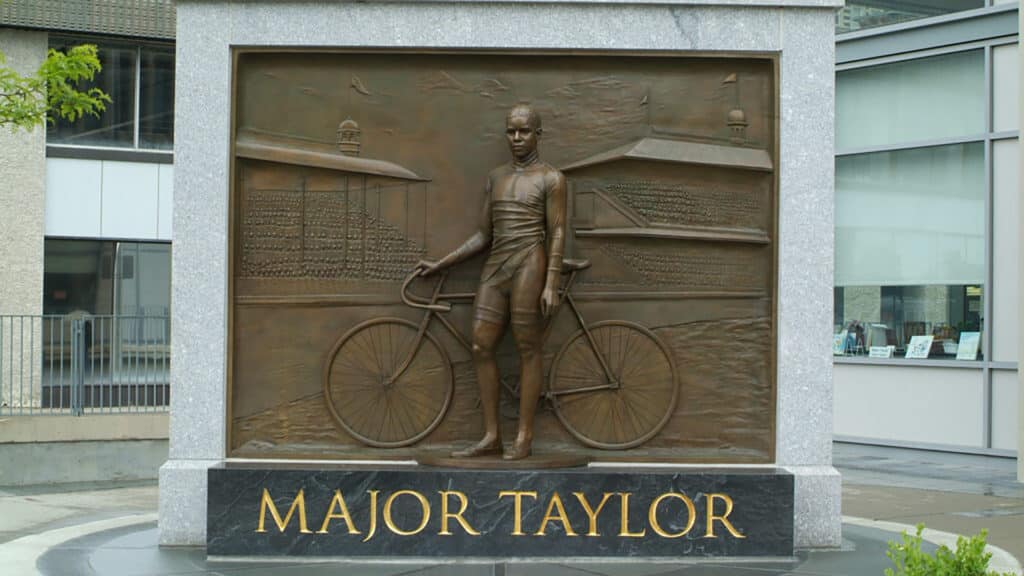
In 1895, Taylor moved from Indianapolis to Worcester, then a center of the United States bicycle industry with half a dozen factories and 30 bicycle shops, to work as a bicycle mechanic, according to the Major Taylor Cycling Club of New Jersey. Taylor lived in Worcester most of his life from 1895-1930, and he is honored with a museum and a gorgeous statue dedicated in 2008. Today, the George Street Bike Challenge for Major Taylor honors his legacy on an annual basis. Worcester is linked to the current East Coast Greenway route via a connected Massachusetts trail network.
New Haven, Connecticut
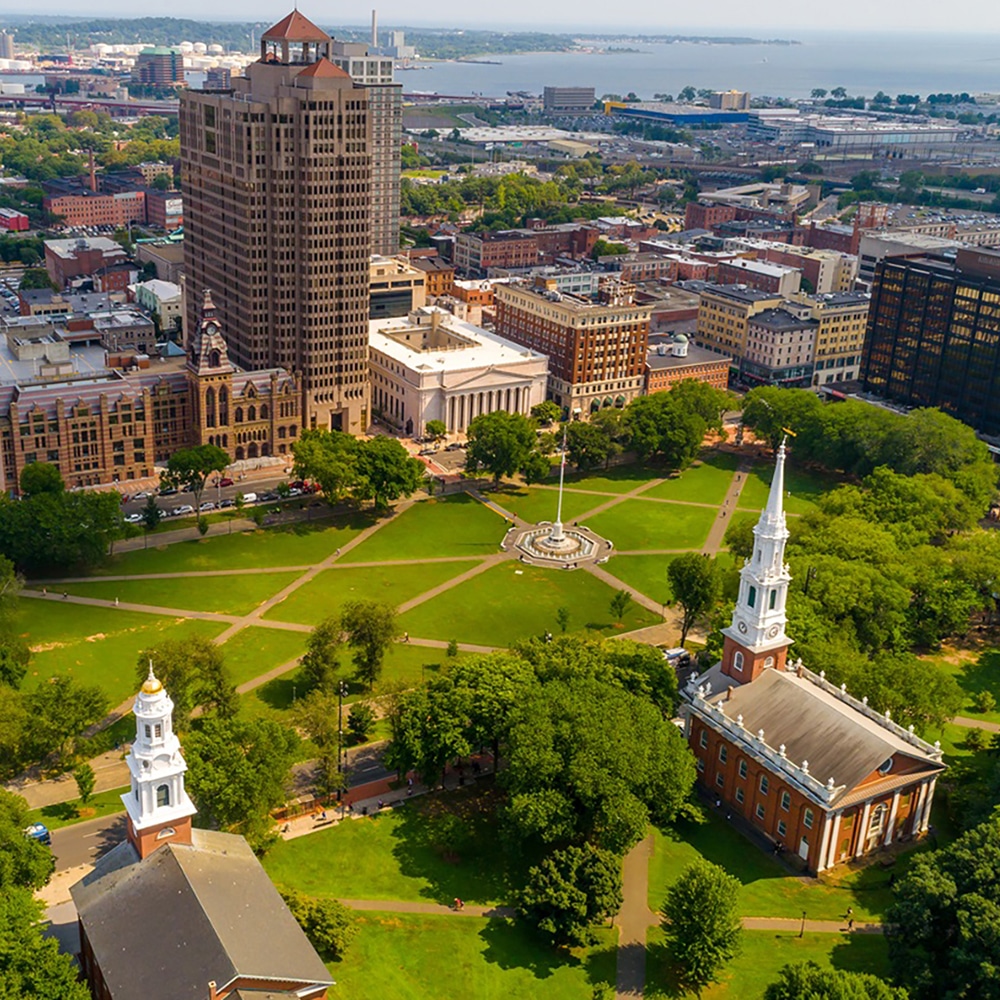
Major Taylor made his East Coast racing debut in New Haven in 1896, winning his first major race despite starting in last place. In the 1890s, New Haven was home to a velodrome and a popular racing scene. Today, New Haven is a key East Coast Greenway hub, serving as the starting point for our annual Ride the State event, as well as a popular Southern New England route linking New Haven to Providence, Rhode Island.
New York City
During Taylor’s career, Madison Square Garden was one of the world’s most prestigious cycling venues. As an 18-year-old in 1896, he made his professional debut there in the Six-Day Bicycle Race, then one of the country’s biggest sporting events. After placing eighth in 1896, Taylor returned to Madison Square Garden in 1901 and earned the title of “Champion Indoor Bicycle Rider of America.” Today, New York City’s Hudson River Greenway is one of the most-used segments of the entire East Coast Greenway route.
Newark, New Jersey
After winning 42 of 57 races in Europe in the spring of 1901, Taylor returned stateside for an exciting 10-mile race in Newark in front of 10,000 spectators. The state-of-the-art Newark Velodrome was built in 1907 and hosted the 1912 UCI World Championships. The East Coast Greenway in Newark and throughout New Jersey is poised for rapid expansion with the ongoing construction of the Greenway, a nine-mile trail that will connect eight communities.
Philadelphia
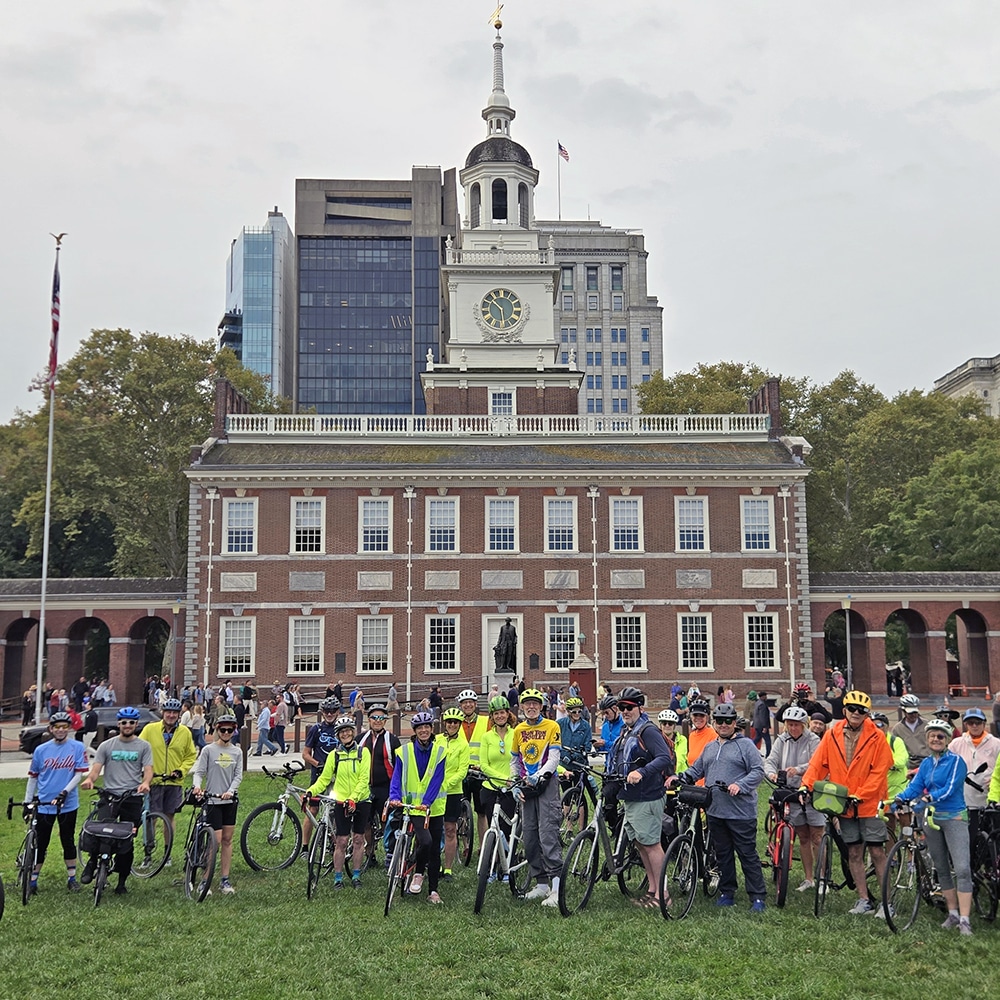
In 1897, Taylor was a member of the integrated Boston pursuit team that competed against a team from Philadelphia. The team photo (right) is possibly the earliest photo of an integrated American professional sports team. Taylor often raced in the Philadelphia area, which is today a hub of East Coast Greenway activity and growth, including the immensely popular Schuylkill River Trail.
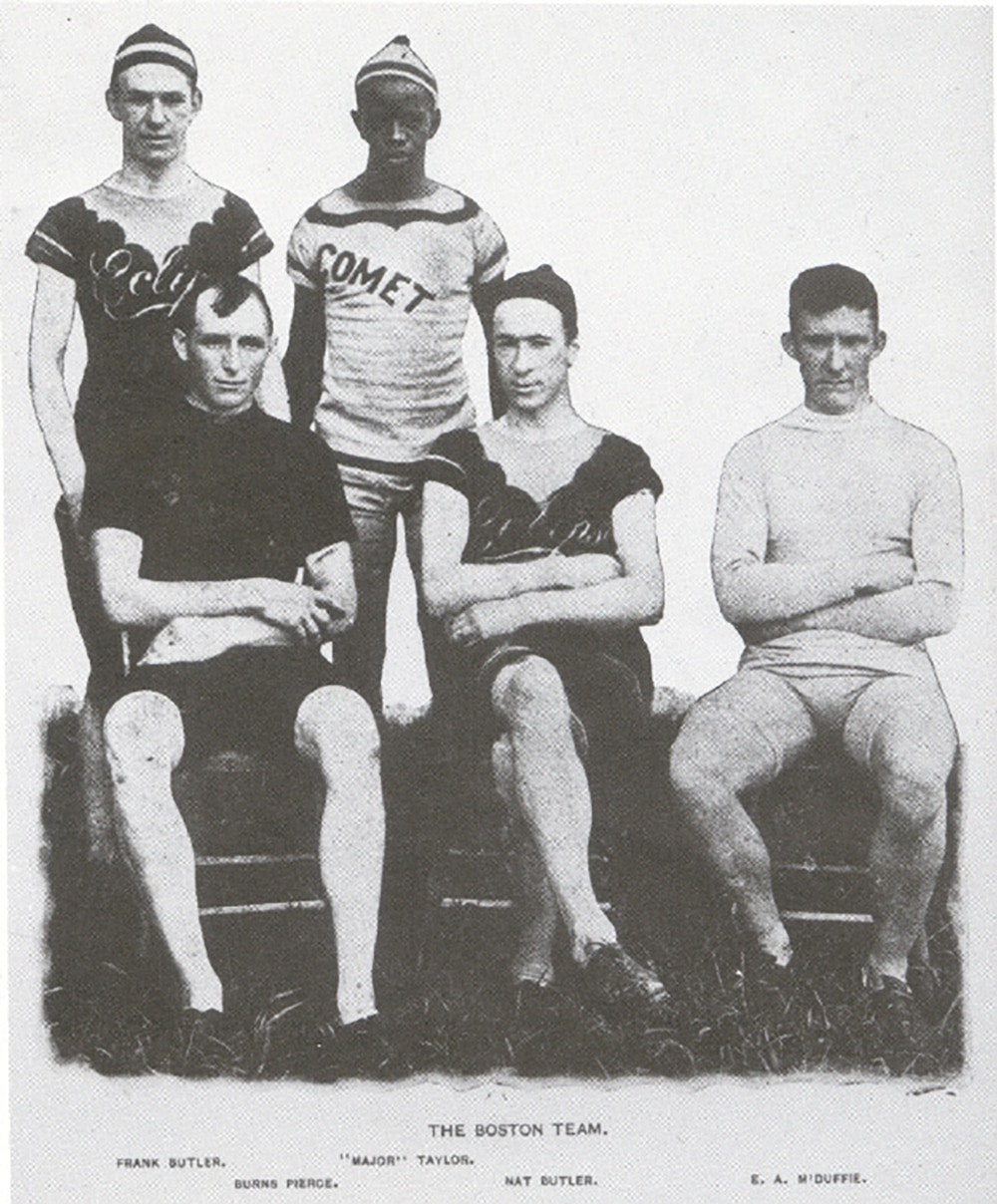
team from Philadelphia in July 1897. This is possibly the earliest photo of an integrated American professional sports team. It appeared in Bearings, July 29, 1897, and is held in the Library of Congress. COURTESY OF MAJOR TAYLOR ASSOCIATION, INC.
COURTESY OF MAJOR TAYLOR ASSOCIATION, INC.
Richmond, Virginia
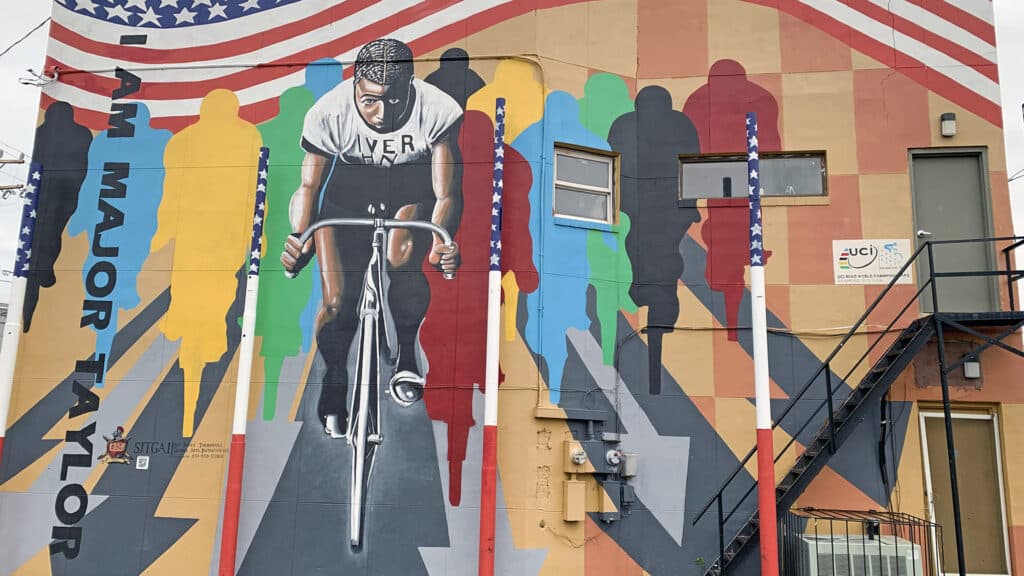
Just three blocks off the East Coast Greenway route in Richmond, Virginia, an incredible mural — “The Major Rides Again” — highlights Major Taylor. Artist James Thornhill created this striking depiction of the 1899 world champion in Richmond’s historic Jackson Ward, unveiled just in time for Richmond 2015 — the UCI Road World Cycling Championships — which brought top cyclists from nearly 70 countries to the city. The mural is located at the corner of North 1st Street and East Marshall Street. Today’s Virginia Capital Trail linking Richmond to Jamestown is a popular East Coast Greenway ride.
Durham, North Carolina
The fifth-annual Major Taylor International Cycling Convention is making its first-ever East Coast appearance in Durham June 4-7. More than 600 cyclists are registered, plus many more youth riders and family members coming along for the ride. Over the course of four days, participants will experience curated scenic routes, hands-on clinics, community-centered programming and unforgettable moments that celebrate resilience, inclusion, and unity through cycling. Durham is the headquarters of the East Coast Greenway Alliance and part of the longest continuous stretch of the Greenway in a metropolitan area.
Greenway Stories
News, features and more from throughout the East Coast Greenway corridor