2025 East Coast Greenway designations
In 2025, the East Coast Greenway Alliance approved more than 15 miles of traffic-free trail segments as official additions to the developing Maine-to-Florida bicycle and pedestrian route.
Stretching across six states and Washington, D.C., the new designations include more than eight miles in New Hampshire, plus key connections to existing trail networks in Boston; D.C.; Philadelphia; New Haven, Connecticut; and Maryland. The latest additions also feature an expansion of Connecticut’s scenic Beach Street Trail and two new segments of the Waccamaw Neck Bikeway in South Carolina.
The full list from north to south includes:
- New Hampshire Seacoast Greenway – Phase 1A, NH
- Borthwick Avenue Sidepath, NH
- William Felton “Bill” Russell Bridge, MA
- Farmington Canal Heritage Trail – Phase IV, CT
- Beach Street Trail, CT
- Christian to Crescent Trail Connector, PA
- WB&A Trail Patuxent River Bridge, MD
- Metropolitan Branch Trail – Brookland to Fort Totten, DC
- North Litchfield Safety Connector, SC
- Waverly Road School Safety Connector, SC
Currently, the East Coast Greenway features more than 1,100 traffic-free miles connected by the interim route on roadways. Whenever possible, the interim route is located on low-traffic roadways; however, high-stress segments do exist. More than 65% of the Maine-to-Florida route is complete or in an advanced stage of development. More details on each 2025 designation are available below.
New England Designations
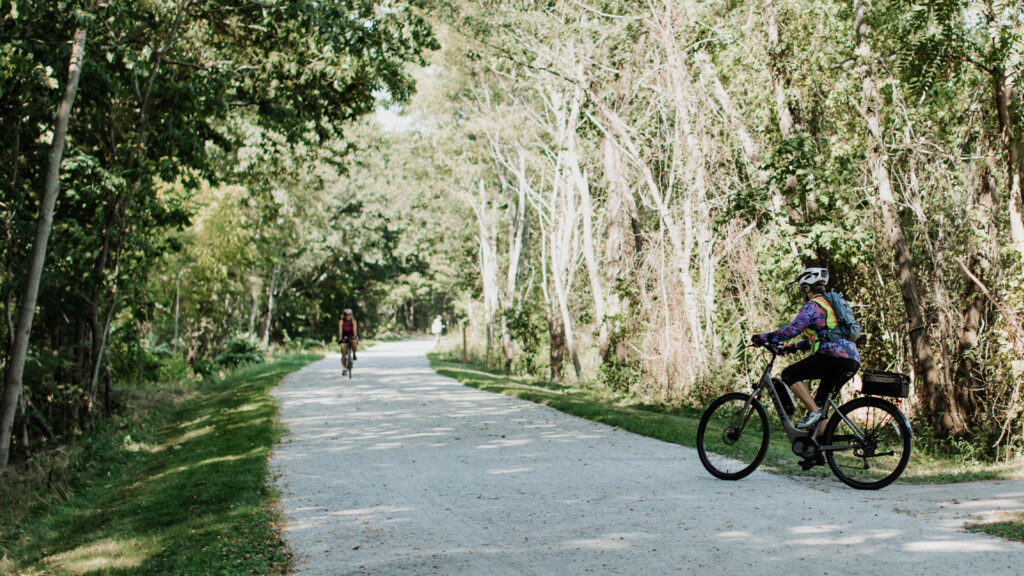
New Hampshire Seacoast Greenway – Phase 1A (Portsmouth to North Hampton, New Hampshire), 8 miles: The first segment of the New Hampshire Seacoast Greenway, connecting Portsmouth to Hampton, officially opened in September 2024, establishing a critical connection to Maine and marking significant progress for the Greenway in New England. With this addition, New Hampshire has completed more than 50% of its East Coast Greenway route. The full New Hampshire section is expected to be completed within the next decade. When complete the New Hampshire Seacoast Greenway will include 14.5 miles of rail-trail, plus the combination of on- and off-road connection route through Portsmouth, meeting Maine’s Eastern Trail at Memorial Bridge.
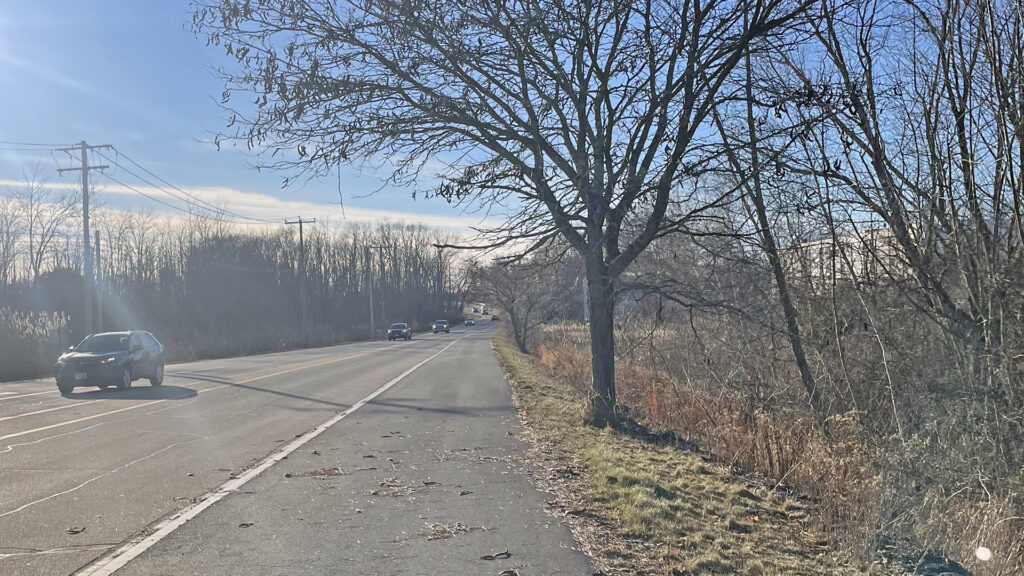
Borthwick Avenue Sidepath (Portsmouth, New Hampshire), 0.5 miles: Connecting a pair of existing sidepaths, the Borthwick Avenue Sidepath serves as a key link from the expanding New Hampshire Seacoast Greenway toward downtown Portsmouth. When complete the New Hampshire Seacoast Greenway will include 14.5 miles of rail-trail, plus the combination of on- and off-road connection route through Portsmouth, meeting Maine’s Eastern Trail at the Memorial Bridge.
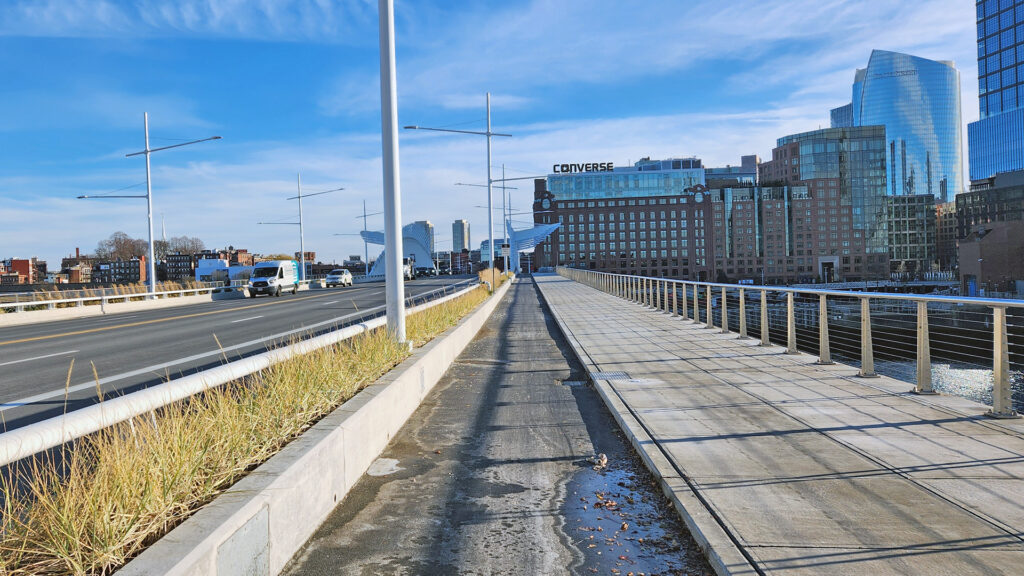
William Felton “Bill” Russell Bridge (Boston), 0.3 miles: Renamed to honor Boston Celtics legend and civil rights hero Bill Russell, the former North Washington Street Bridge now features separated bicycle and pedestrian facilities on each side, connecting City Square in Charlestown over the Charles River to Keaney Square in Boston. A future project will extend this complementary route connection to the Greenway spine route, north to the Northern Strand Trail and eventually to the New Hampshire border.
Farmington Canal Heritage Trail – Phase IV (New Haven, Connecticut), 1.6 miles: The completion of New Haven’s newest 1.6-mile leg of the Farmington Canal Heritage Trail realizes a decades-long dream of reconnecting the southernmost section of the trail from its current end at Temple Street back to the canal’s historic origin at the Canal Dock Boathouse. A portion of the new segment traverses underneath Whitney Avenue through a tunnel and then rises again back to street level at the intersection of Grove and Orange Streets. The section also includes interpretive displays and illumination, as well as ramps and stairs for convenient pedestrian and cyclist access. Stretching 82 miles from New Haven to Northampton, Massachusetts, the Farmington Canal Heritage Trail is more than 80% complete, with full completion expected by 2030.
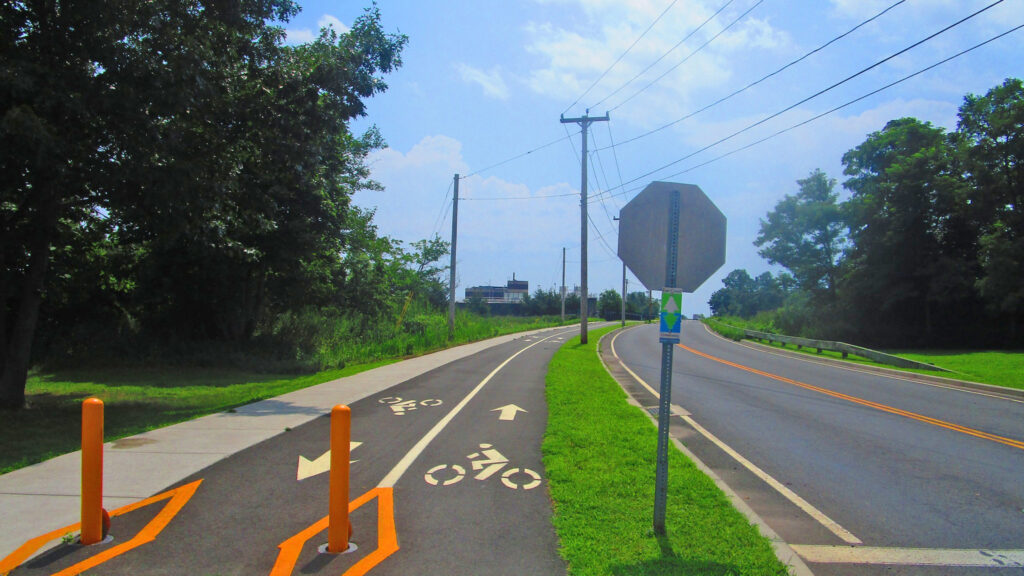
Beach Street Trail (West Haven, Connecticut), 0.7 miles: Safety on the East Coast Greenway in West Haven is much improved thanks to the addition of the Beach Street Trail cycletrack, running north from Morse Avenue and Beach Street to Monahan Place and 1st Avenue. Featuring scenic views of the Sandy Point Beach and Bird Sanctuary, the new segment connects to the 1.2-mile Savin Rock Trail to enhance the waterfront trail experience in West Haven.

Mid-Atlantic & Southeast Designations
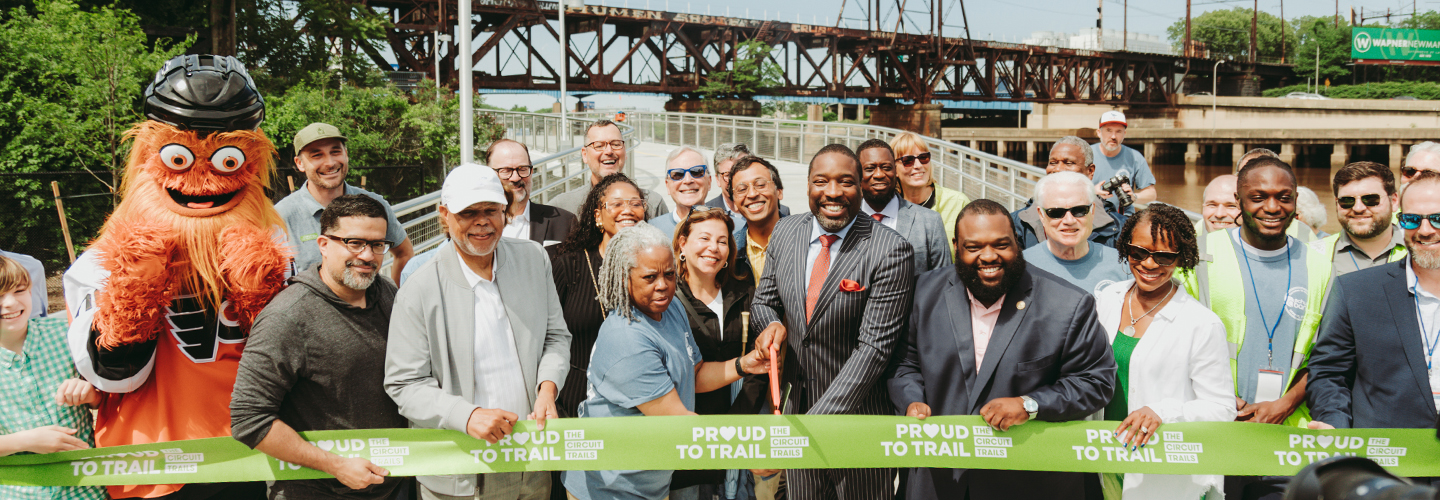
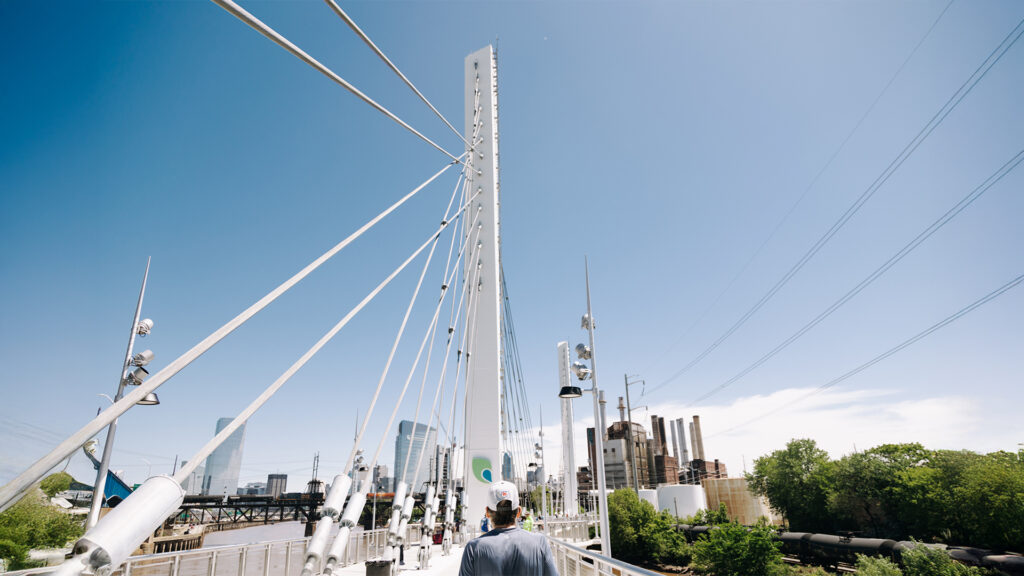
Schuylkill Banks – Christian to Crescent Trail Connector (Philadelphia), 0.5 miles: The Christian to Crescent Trail Connector is an impressive half-mile of new boardwalk, paved trail and a 650-foot cable-stayed pedestrian bridge that links the Schuylkill Banks portion of the Schuylkill River Trail with the Grays Ferry Crescent Trail, creating 3.7 miles of continuous East Coast Greenway through Center City Philadelphia. Its completion marks a major step forward for both the regional Circuit Trails network and the East Coast Greenway through Philadelphia, linking neighborhoods with safe, accessible routes for walking and biking.
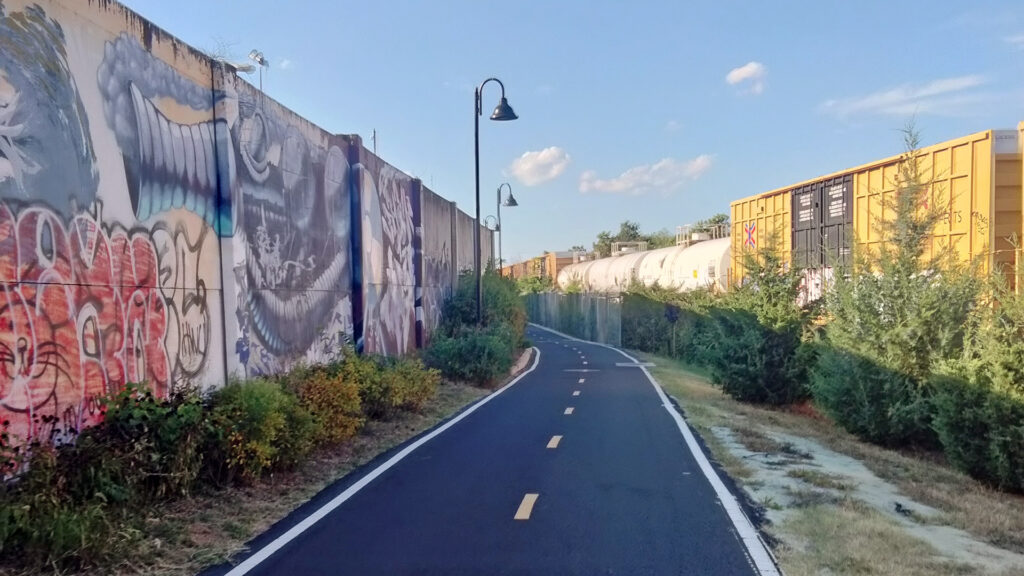
Metropolitan Branch Trail – Brookland to Fort Totten (Washington, D.C.), 1.6 miles: The newest segment of the popular Metropolitan Branch Trail to be designated as part of the East Coast Greenway features a freshly built 0.5-mile stretch connecting Fort Totten to Bates Road. The 1.6-mile designation, which will be added to the Greenway’s complementary route, also includes a 0.8-mile existing segment connecting to the Brookland Arts Walk and a 0.3-mile section of the MBT that was repaved and restriped. When completed, the Metropolitan Branch Trail will be an 8-mile trail that runs from Union Station in D.C. to Silver Spring, Maryland. Following the Metropolitan Branch Line of the B&O Railroad, the trail passes through numerous vibrant and historic neighborhoods, as well as connecting to the National Mall.
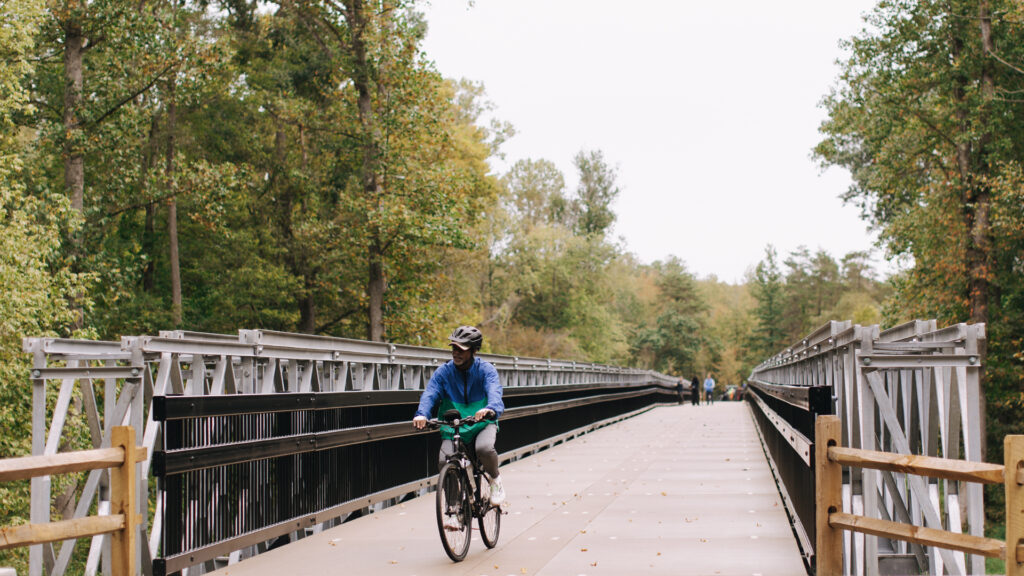
WB&A Trail Patuxent River Bridge (Bowie, Maryland), 0.1 miles: The 530-foot WB&A Trail Patuxent River Bridge links two previously isolated segments of the WB&A Trail from Odenton to Bowie, creating 12.7 miles of a continuous WB&A Trail — and East Coast Greenway — across Central Maryland. Thanks in part to this key connection, the Greenway is now more than 75% complete between Baltimore, Annapolis, Washington, D.C. and Northern Virginia with 96 miles of trail along the 126-mile corridor.
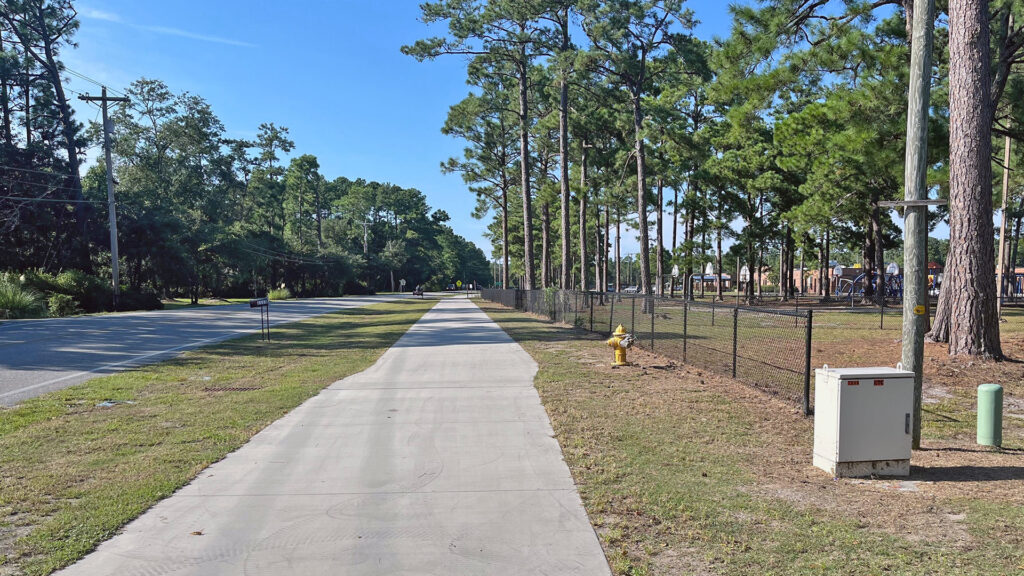
North Litchfield Safety Connector (Georgetown County, South Carolina), 0.7 miles: Completed in 2021, the North Litchfield Safety Connector is a 0.7-mile paved pathway linking Boyle Drive and Trace Drive in Litchfield, South Carolina. The segment is part of the Waccamaw Neck Bikeway system, which was established in 1994 by longtime advocate Linda Ketron and others as a 27-mile bicycle and pedestrian route in Horry and Georgetown counties. To date, 18.6 miles of trail have been constructed with this designation closing one of the last remaining gaps in the current route.
Waverly Road School Safety Connector (Georgetown County, South Carolina), 1.4 miles: Completed in 2025, Waverly Road School Safety Connector is a 1.4-mile paved pathway creating a safe off-road connection to Waccamaw Elementary School and the recently opened Waverly Park. The segment is part of the Waccamaw Neck Bikeway system, which was established in 1994 by longtime advocate Linda Ketron and others as a 27-mile bicycle and pedestrian route in Horry and Georgetown counties. To date, 18.6 miles of trail have been constructed with this designation closing one of the last remaining gaps in the current route.
Greenway Stories
News, features and more from throughout the East Coast Greenway corridor