A blueprint for better biking
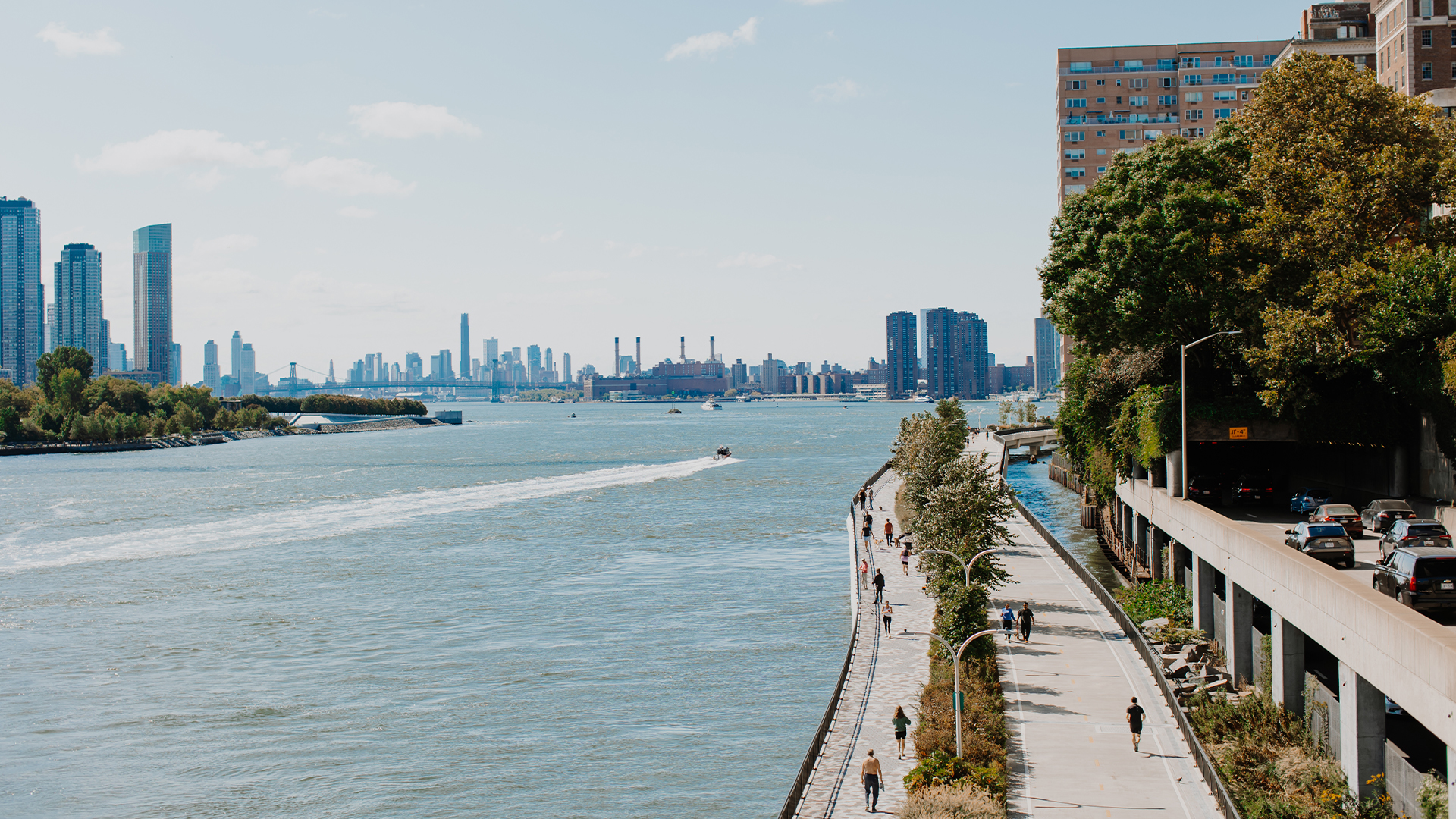
“Cycling is healthy.”
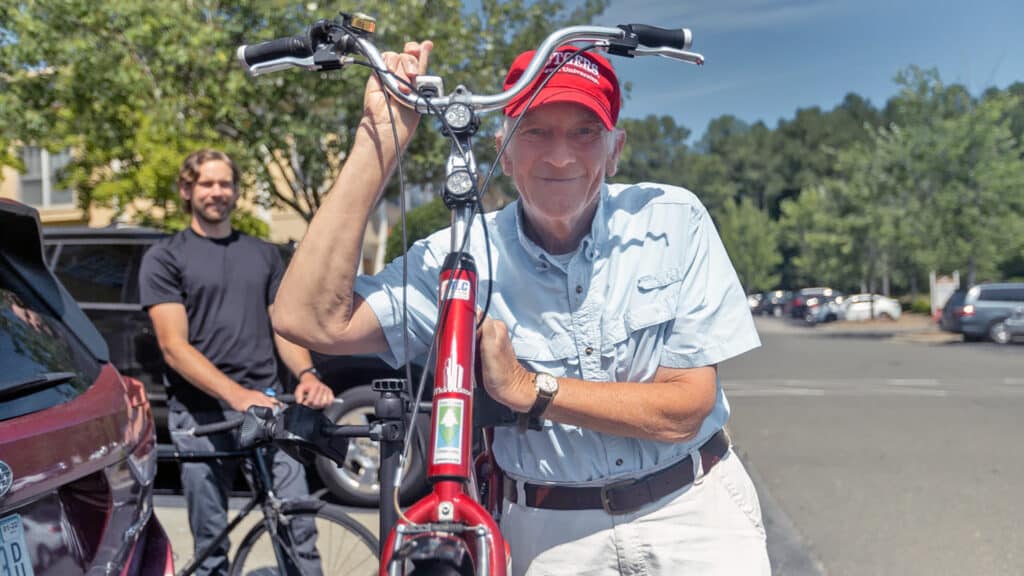
This simple mantra guides the lifestyle and academic work of East Coast Greenway Alliance Advisory Board member, professor and author John Pucher, who — at age 75 — is a regular rider of the East Coast Greenway in Raleigh, North Carolina.
Pucher, alongside co-authors Ralph Buehler, Marcel Moran, Emmanuel de Lanversin and Rachel Aldred, build upon this theme in “Cycling in New York, London, Paris, and Berlin before, during, and after the COVID-19 pandemic,” published by the International Journal of Sustainable Transport in April.
The paper examines how cycling levels, demographics and injury risk have changed in New York, London, Paris and Berlin before and after COVID-19, alongside shifts in policy and infrastructure. Using data from public sources and transport agencies, it finds that cycling steadily increased from 1990-2019 and has continued to grow since the pandemic. By 2023, biking more than doubled in Berlin, tripled in New York and London and increased a remarkable 20-fold in Paris.
At the same time, cycling has become safer, with declining fatality and injury rates per trip since 2005. The study highlights protected bike lanes, expanded bike parking and bikeshare and traffic-calming measures as key drivers of these gains. Long-term political support and strong advocacy have also been essential to sustaining investment and progress.
Following significant increases in cycling during the COVID-19 pandemic, biking in many areas declined in subsequent years, but these four major cities studied bucked that trend. “Historically, they were not prime cities for bicycling, especially New York, London and Paris. They had a car-oriented history. We were interested in what these cities did to raise cycling levels since 2000 and to keep cycling growing even after the COVID pandemic, and that’s how the comparison came about,” Buehler explains.
“The key takeaway is that it is possible to promote bicycling in cities that don’t have a cycling history.”
Physical Improvements
“Improving bicycle infrastructure is key to increasing cycling,” says Pucher, but he emphasizes that it is crucial to complement pro-bike policies with “auto disincentives” such as traffic-calming of residential neighborhoods (redesigning streets with speed limits of 20mph or less), as done extensively in London and Paris.
In the United States, you may see streets around schools with lower speed limits during certain times of the day. In Paris, however, many neighborhood streets (“green streets”) are completely closed to automobiles and replaced with attractive planting, sculptures and street furniture, creating safe spaces for pedestrians and cyclists.
“It’s amazing what Paris and London have done, in terms of changes over time. Large parts of London and Paris, especially Paris, have been traffic-calmed in recent years. Much earlier, Berlin had already traffic-calmed about 80% of its streets.”
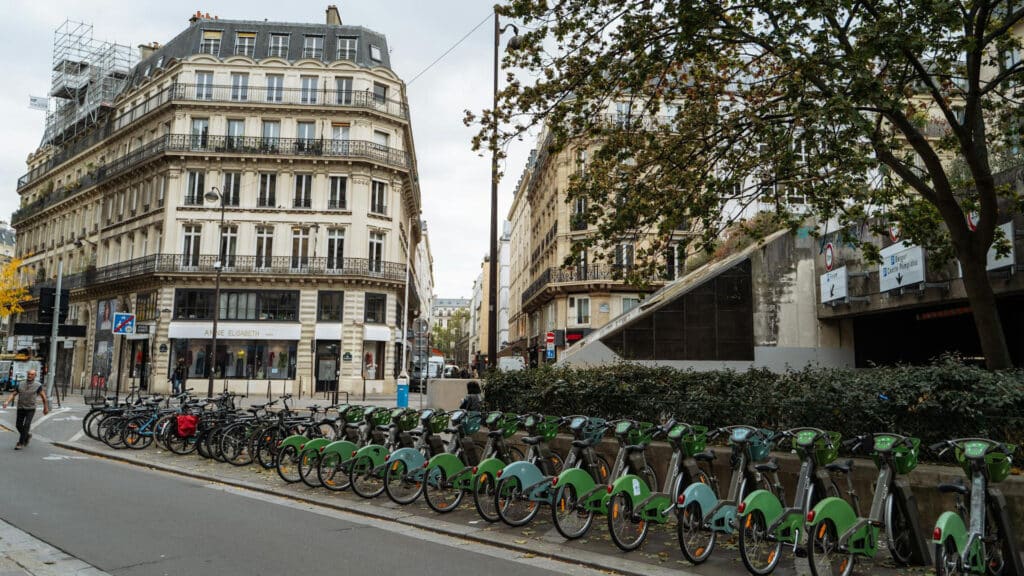
In addition to improvements in infrastructure, Buehler sees the availability of bikeshare as playing a key role in the expansion of bike ridership, particularly in Paris and New York .
“In a way, bikeshare made it cool or hip to ride a bike. They’re designed in a special way to be visible, and tourists love them. They’re fairly slow, so there’s no negative image with the bikeshare bikes. They’re not seen as somebody pushing you off a trail.”
Political Support & Advocacy
Sustained political commitment has been key to the progress seen in New York, London, Paris and Berlin. In Paris, much of that momentum was driven by the need to improve air quality and reduce urban heat. Under former mayor Anne Hidalgo, the city built hundreds of miles of protected bike lanes to curb car use and create a cleaner, more livable environment.
“Paris was more top down, but in the other three cities, it’s definitely the advocates that have played a key role,” Pucher says
Advocacy work is a long game with projects taking years or decades to come to life. Pucher cites New York City’s Transportation Alternatives as an organization that has spent more than three decades advocating for safer infrastructure and policies that have been gradually implemented by the city over the past 20 years.
Advocacy groups provide good ideas, build public support and have the ability to spread the message via traditional media and social media that really makes a difference. Positive partnerships between transportation planners, politicians and advocacy organizations can lead to progress, as was evident during research in Berlin, London and New York.
“I think that the main thing that other cities can learn is that if you provide these conditions, people will actually come out and ride bikes in these safe environments for cycling,” Buehler says. “Think about New York without bike infrastructure. The roads are so crowded, so much traffic. You need an especially well-trained and courageous person to ride under these conditions. If you provide conditions that feel safe or are safe for a larger group of society, more people will ride a bike and will consider riding a bike.”
Health & the Greenway
For Pucher, the health benefits of biking on trail networks like the East Coast Greenway in North Carolina should be obvious for Americans. “Extensive research by public health experts shows that Americans are more sedentary than Europeans. Thus, we get less physical activity from daily walking and cycling,” Pucher says.
“That shorter average life expectancy of Americans compared to Northern European countries may be partly due to the failure of most U.S. residents to reap the enormous health benefits of walking and cycling. Americans bear the significant health costs of being stuck in a car most of the time, which has been shown to reduce physical activity, increase obesity rates, and impair physical and emotional health.”
Greenways and access to nature via bicycle make for a memorable excursion for Pucher. “You’re active in a way that’s very pleasant, and I find it’s a different experience from walking. With greenways, it’s like an adventure because you’re also exploring new territory or riding next to the Neuse River for 20 or more miles, usually through woods or fields. It’s a glorious nature ride.”
Pucher believes that touting the health benefits — as well as the economic and environmental gains — of bicycle and pedestrian infrastructure is key. Organizations like the East Coast Greenway Alliance are connecting “bike trails along the entire East Coast corridor, thus providing the crucial integration to make the overall East Coast Greenway such an attraction from Florida to Maine,” he says.
If North Carolina improves a key East Coast Greenway segment, it doesn’t stand alone. It connects riders to trails in South Carolina, Virginia and beyond. That kind of “interregional coordination” is essential.
“I think Raleigh is amazingly well-equipped with greenways,” he says. “I’m just so glad that we’re connected to the East Coast Greenway.”
Pucher says it is also important to communicate the value of these projects by highlighting economic benefits to elected officials to help secure funding, and promoting new segments to the general public. Each addition is a milestone and a tangible benefit for local, state and national audiences.
Buehler adds, “I think an organization that looks at the greenways more holistically along the East Coast can help provide more arguments for bicycling,” by highlighting the health, environmental, economic development and tourism benefits
Pucher and his fellow researchers are already planning their next paper, focusing on progress made in American cities, including Boston, Washington, D.C. and Miami on the East Coast Greenway.
“The key takeaway is that it is possible to promote bicycling in cities that don’t have a cycling history,” Buehler says. As this new paper demonstrates, investments in cycling infrastructure are already delivering major benefits in leading cities across Europe and the United States while also providing a clear roadmap for communities looking to expand bicycling in the years ahead.
Greenway Stories
News, features and more from throughout the East Coast Greenway corridor