E-Bike Guidance
Guidance on electric bicycles and the East Coast Greenway
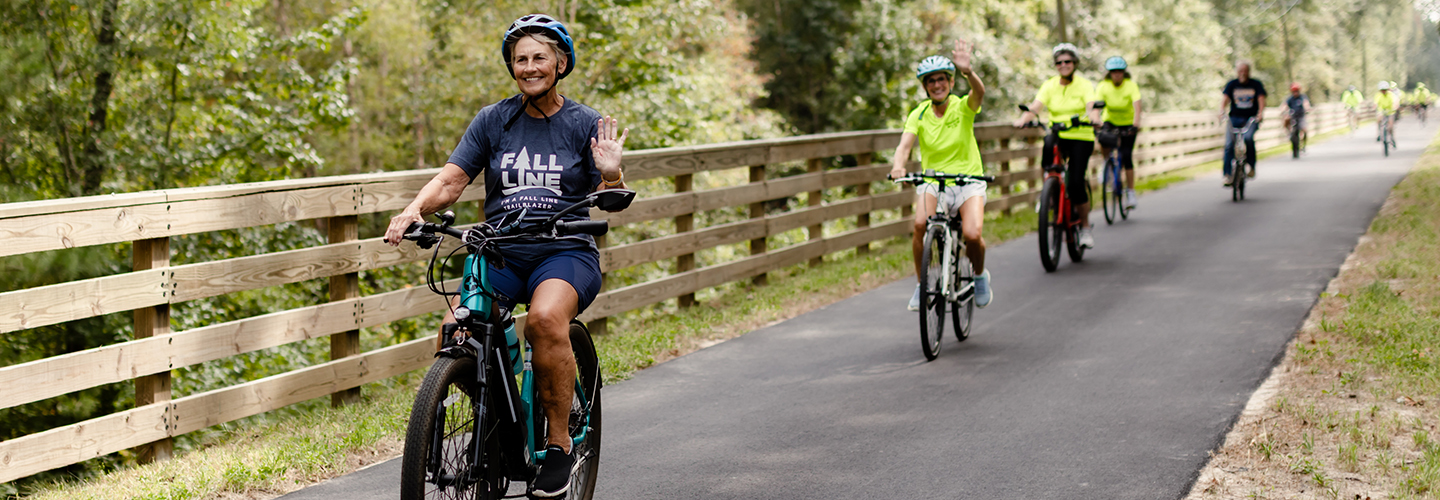
Riding an electric bicycle (e-bike) on the East Coast Greenway is acceptable as long as cyclists do not exceed locally set speed limits and they follow all the customary rules of trail etiquette including passing others safely. Many states and municipalities have existing regulations or are actively working on e-bike policies. Our guidance policy in all cases defaults to state and local rules.
The East Coast Greenway Alliance does, however, support treating e-bikes the same way as traditional bicycles, which includes allowing them on shared-use paths. E-bikes are used by many different people for transportation and recreation in a similar manner as traditional bicycles. Local rules regulate where e-bikes can be ridden, however, when visiting a city or town without a specific rule for e-bikes, state law controls the use of e-bikes.
Our partner organization, People for Bikes, provides many resources on defining different classes of e-bikes, along with an overview of U.S. e-bike laws and guidance on a model e-bike law.
The East Coast Greenway Alliance encourages the use of e-bikes on the Greenway, where allowed, due to their many benefits such as:
- Increasing access to the Greenway: e-bikes make bicycle travel easier and more efficient, allowing users to travel farther with less effort.
- Expanding the option of bicycling: e-bikes provide a new option for people who want to ride a bicycle, but might not otherwise do so because of physical fitness, age, or convenience.
- Mitigating environmental impacts: when used as an alternative to gasoline- or diesel-powered modes of transportation, e-bikes can reduce greenhouse gas emissions and fossil fuel consumption, improve air quality, and increase use of active modes of transportation. Sharing these benefits with traditional bicycles, e-bikes can decrease traffic congestion, reduce the demand for vehicle parking spaces, and increase the number and visibility of cyclists on the road and in communities across the country.